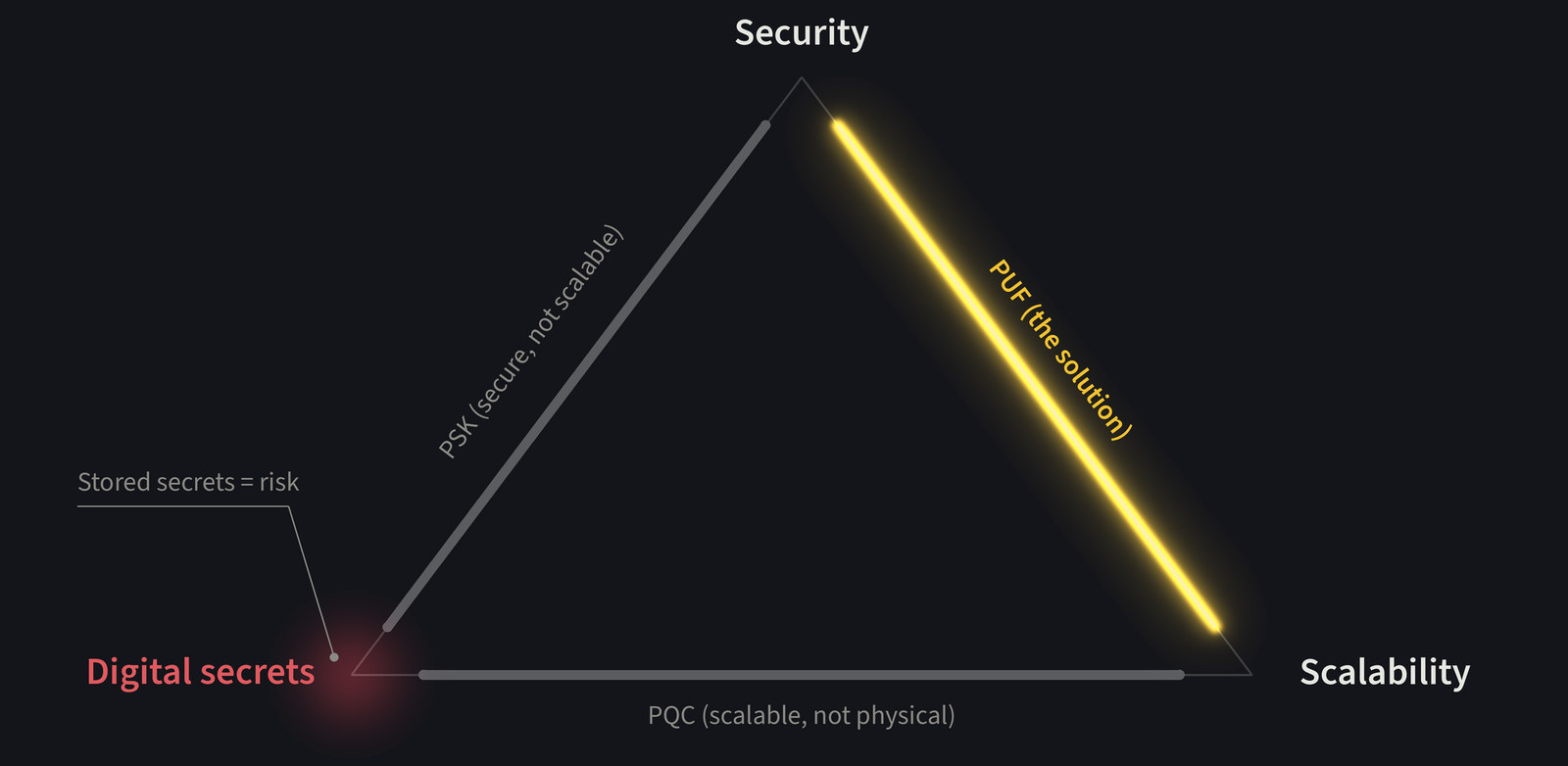
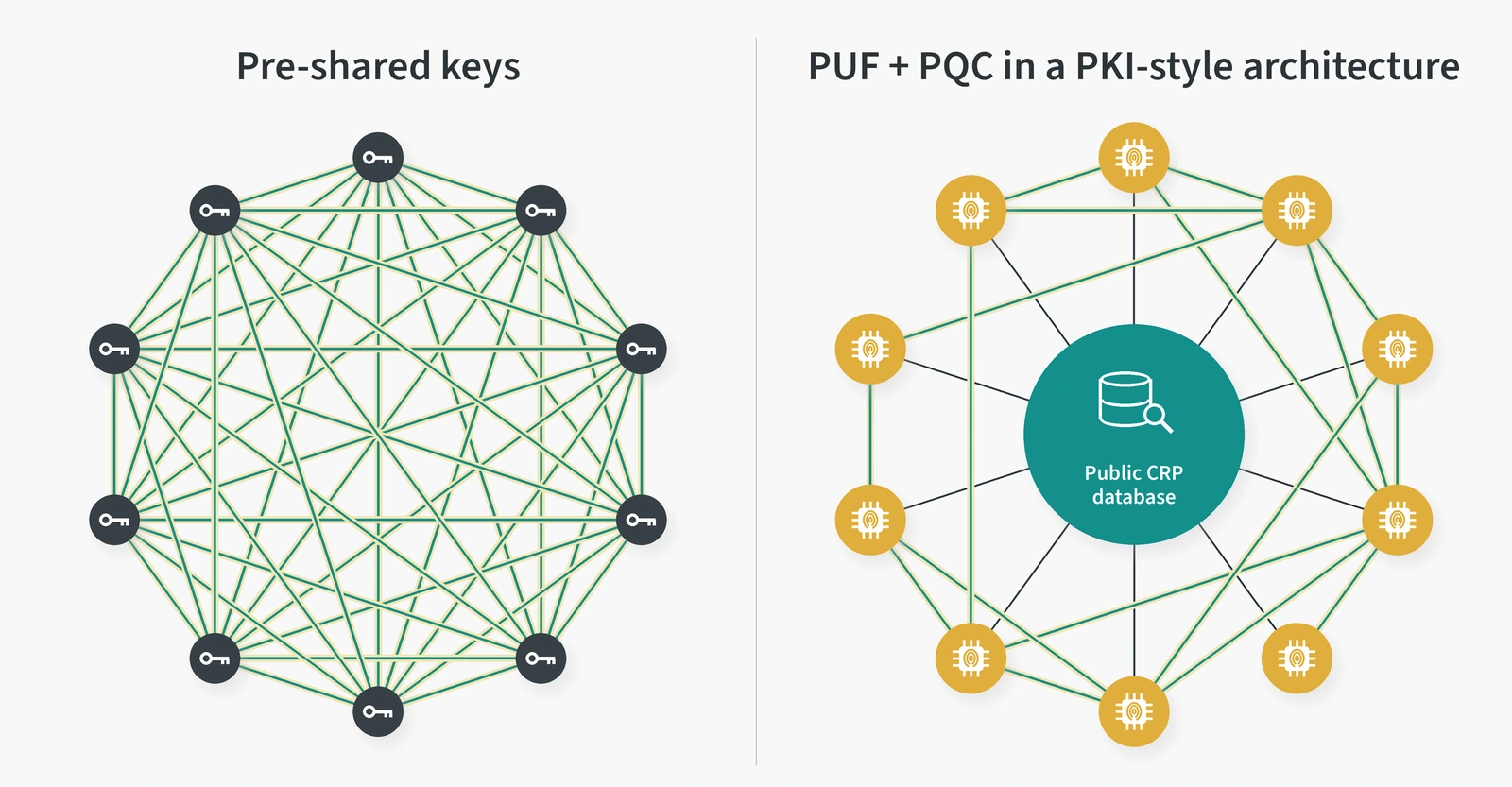
A secure connection rests on two things: encryption, which keeps a message private, and authentication, which confirms who you’re actually talking to. Encryption without authentication means you’re sharing secrets with someone, but you don’t know who. QSA works on the second half, the part that’s still largely unsolved at the hardware level.
It sits alongside whatever’s already protecting the link, the same way two-factor authentication on a phone doesn’t replace the password, but makes it worthless if stolen. The difference is what QSA uses as the second factor: not a code generated by software, but an unclonable physical structure baked into the chip itself, verified by physics rather than by another digital secret sitting next to the first one.